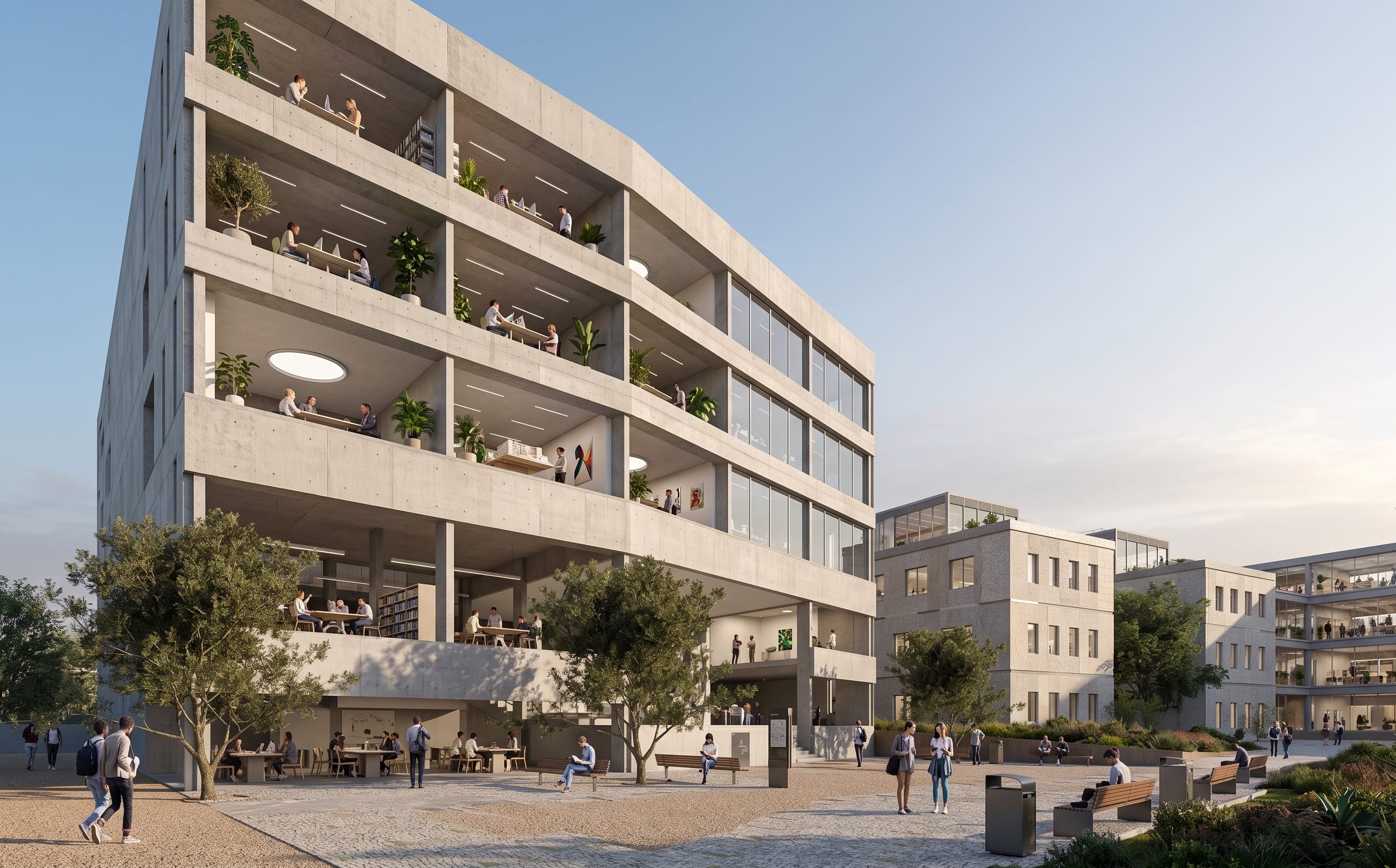
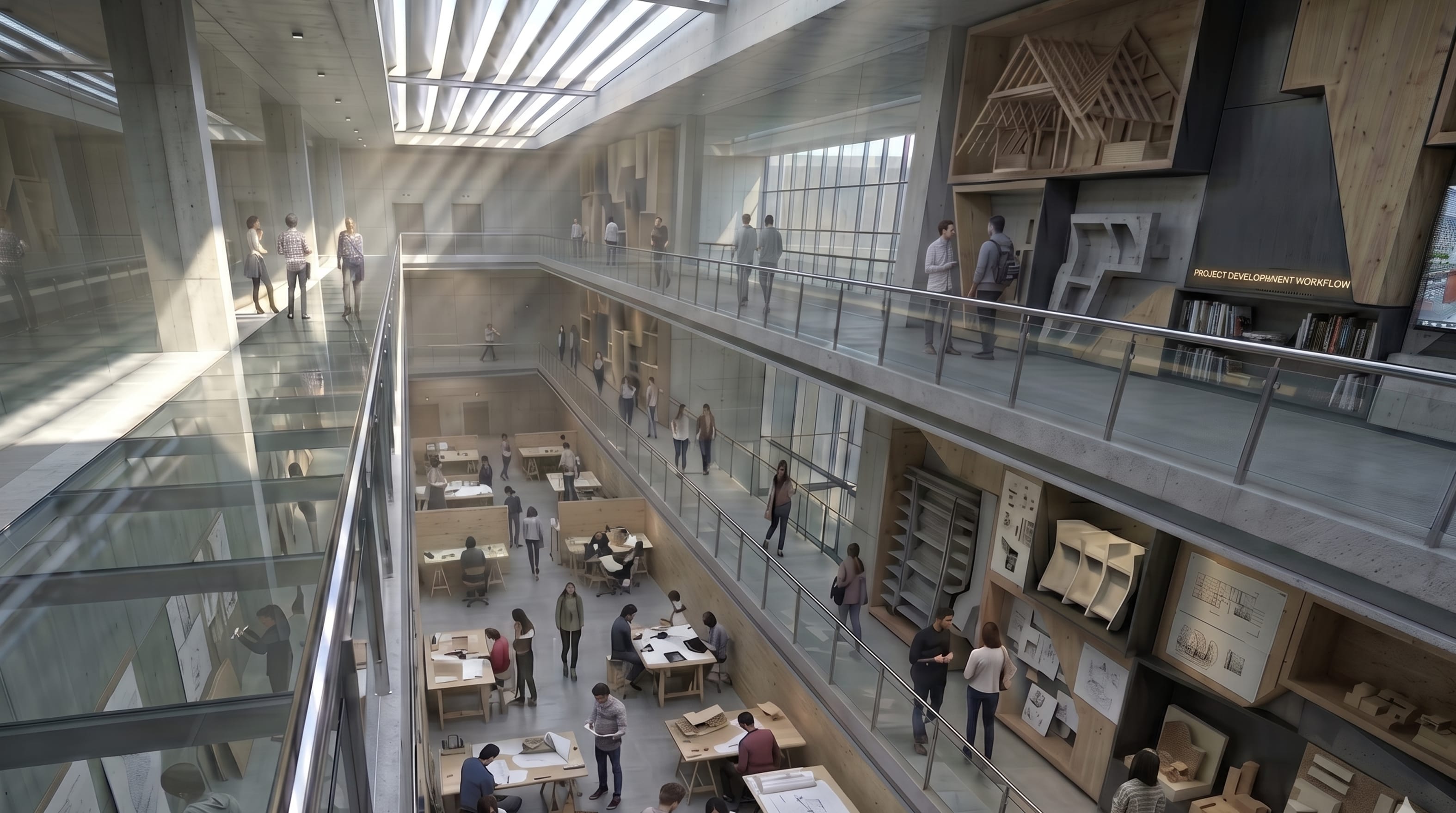
The AUB School of Architecture & Design occupies a strategic location in the middle of the university campus — acting as a transition between upper and lower campus. Students walking between levels can pass through the building, overlooking active studios and live presentation panels. As you ascend, the school moves from public to private: juries and exhibitions on the ground floor, private study sessions and studios at the top.
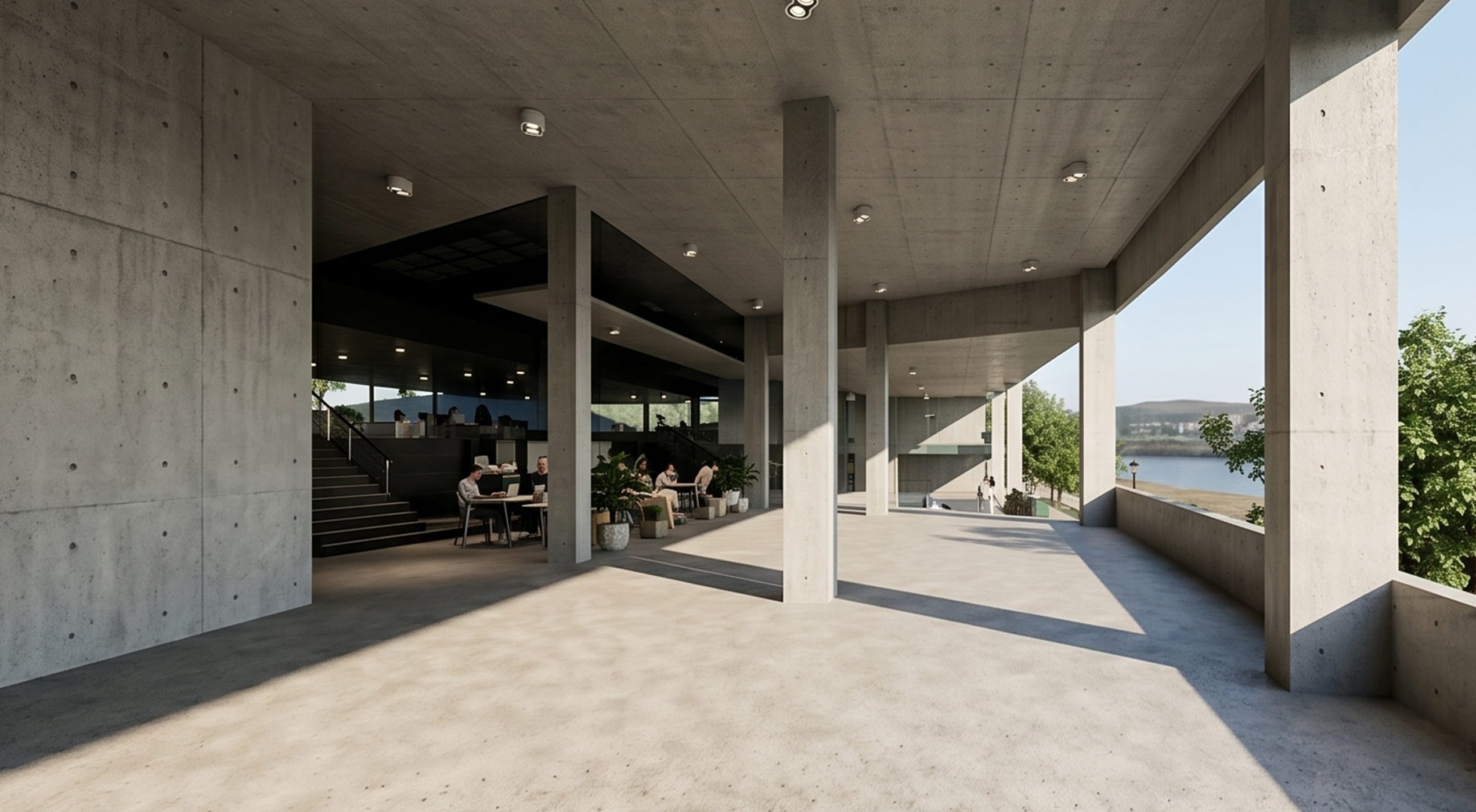
The building was conceived as a permeable threshold — a structure you move through rather than around. The ground floor circulation is open, encouraging students, faculty, and passers-by to interact with the building and the design work happening inside it, dissolving the boundary between the school and the broader campus life.
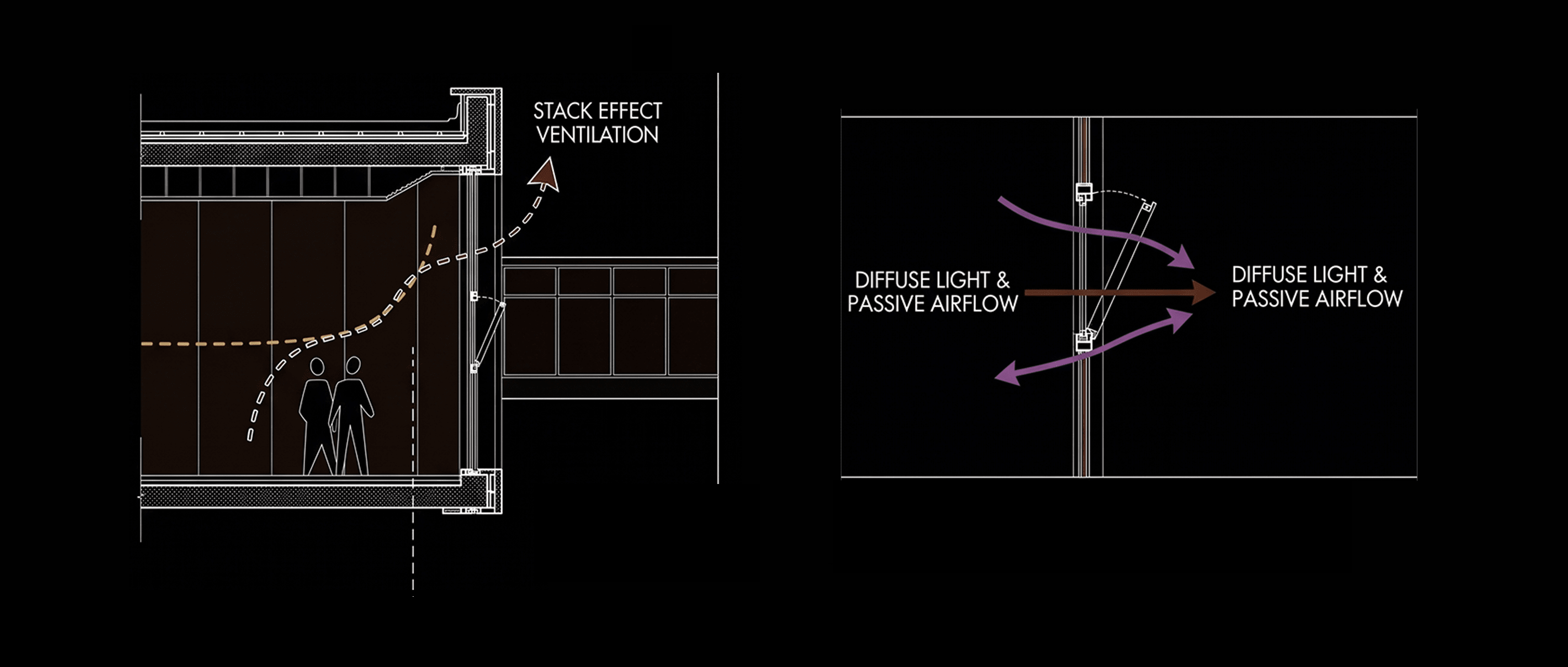
Different openings and mass movements allow the building to become grounded on the site, easing circulation and natural ventilation. The structural strategy — a cantilevering concrete volume — creates the necessary visual presence and sheltered public space at ground level.
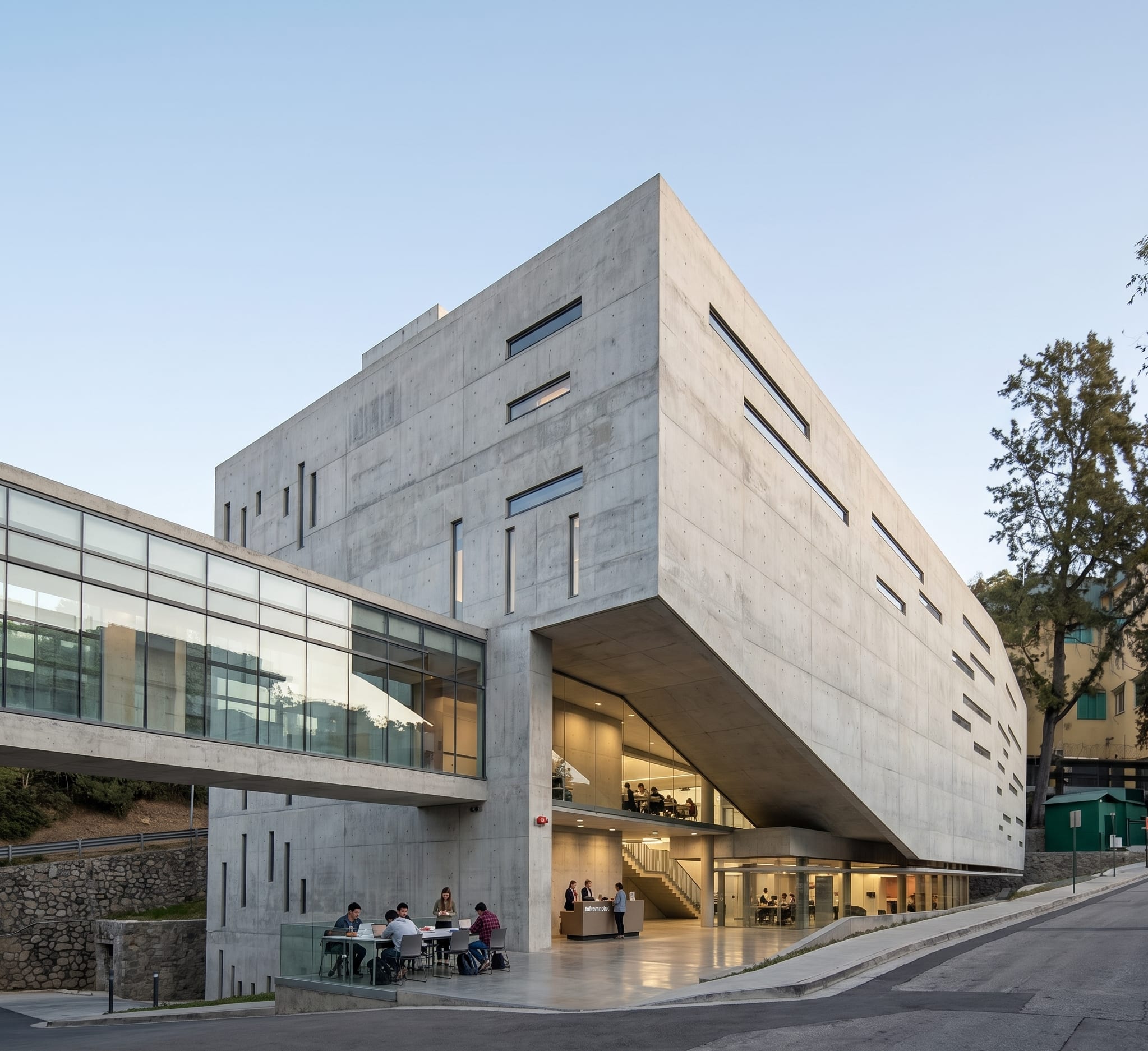
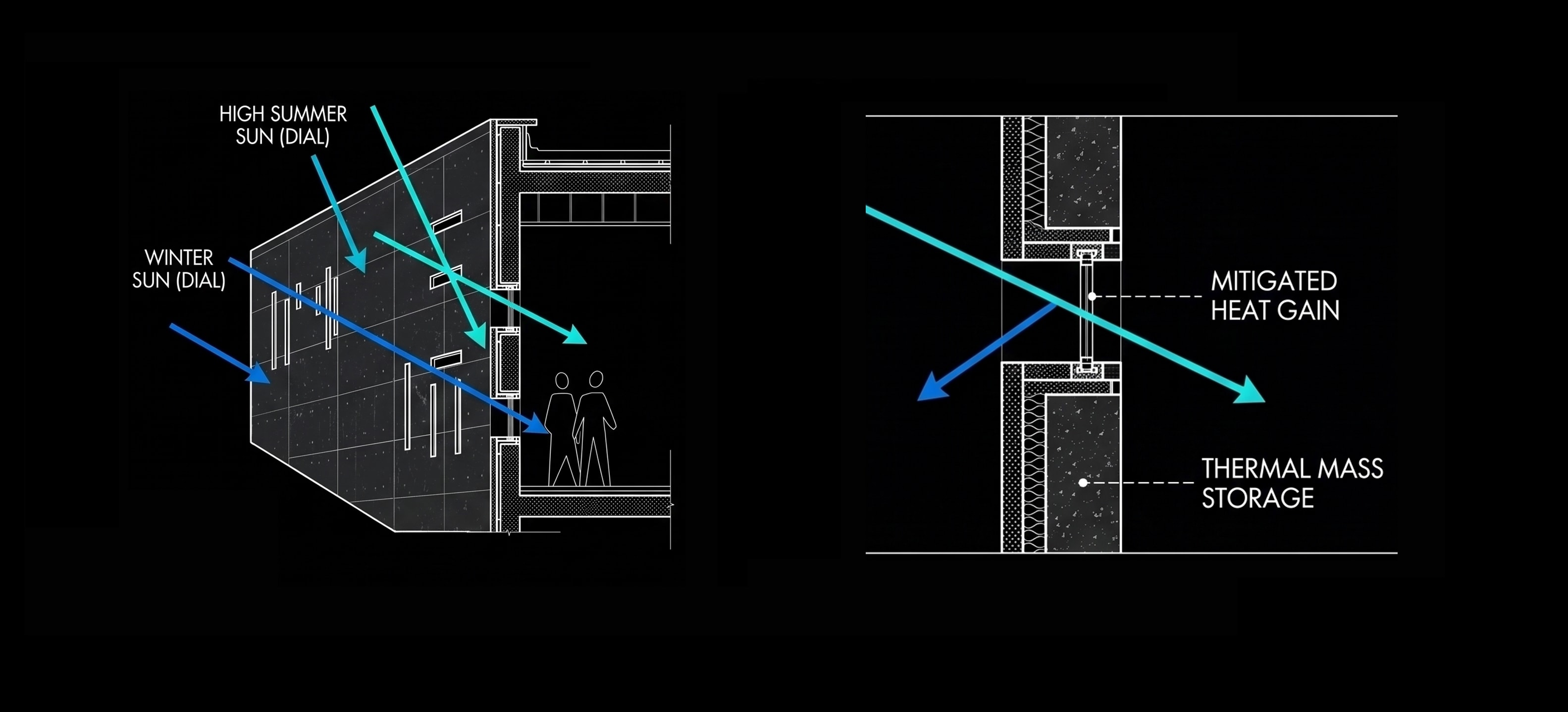
The north facade opens fully towards the Beirut waterfront with maximum curtain wall glazing, admitting indirect northern light into studios without solar gain. The south facade — facing a steep hill — is treated entirely differently: horizontal and vertical slits derived from the maximum sun angle at that latitude control direct sunlight penetration without prioritising views.
This dual facade logic reflects both a climatic response and a social one — openness towards the public realm, restraint towards the hillside.
The building is organised across five levels — basement through third floor — with the programme becoming progressively more private with height. The ground floor hosts juries, exhibitions, and open lobbies that serve as jury spaces for design studios. The atrium acts as a meeting point between students and staff. A terrace at upper level allows students to look down into the basement below, reinforcing visual connectivity across all levels.