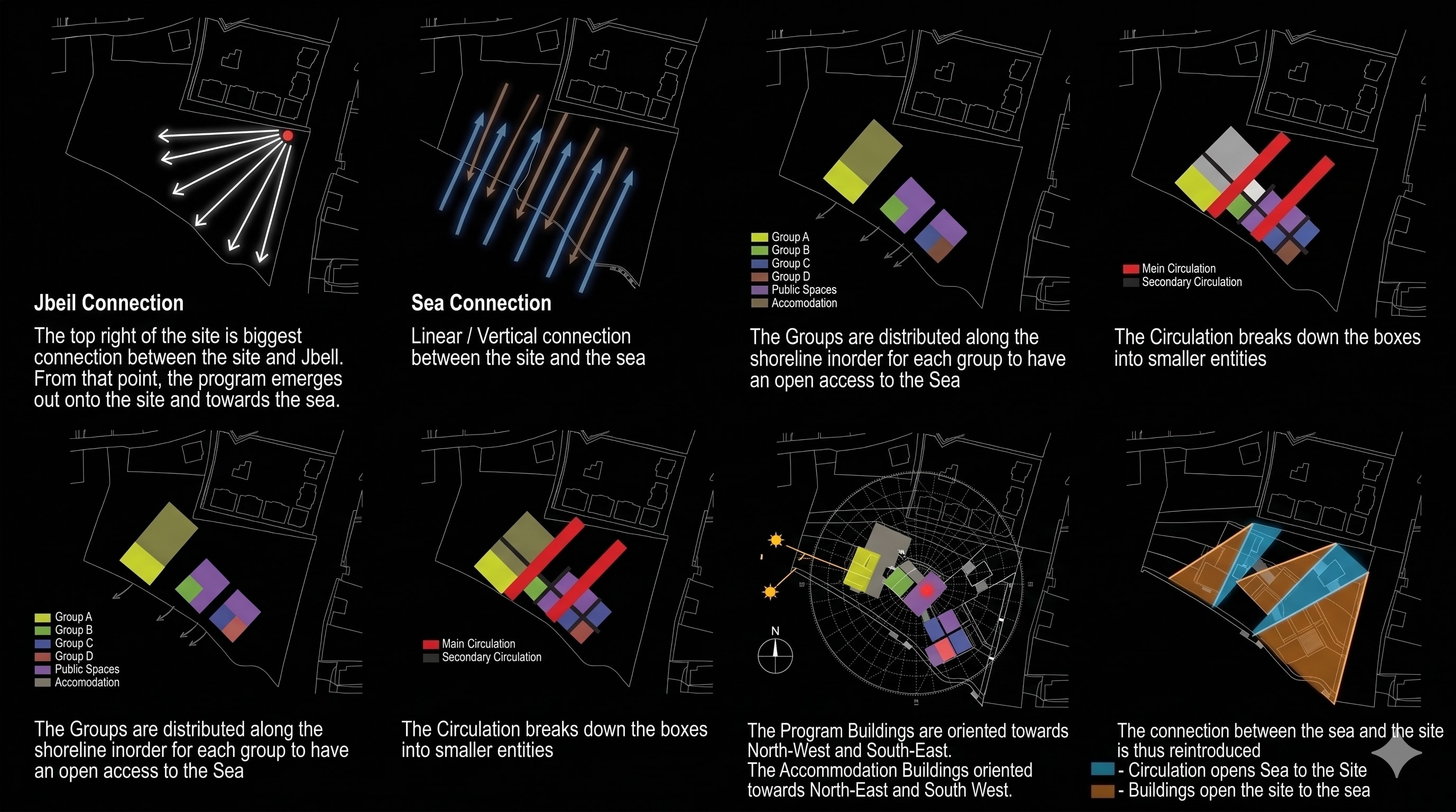
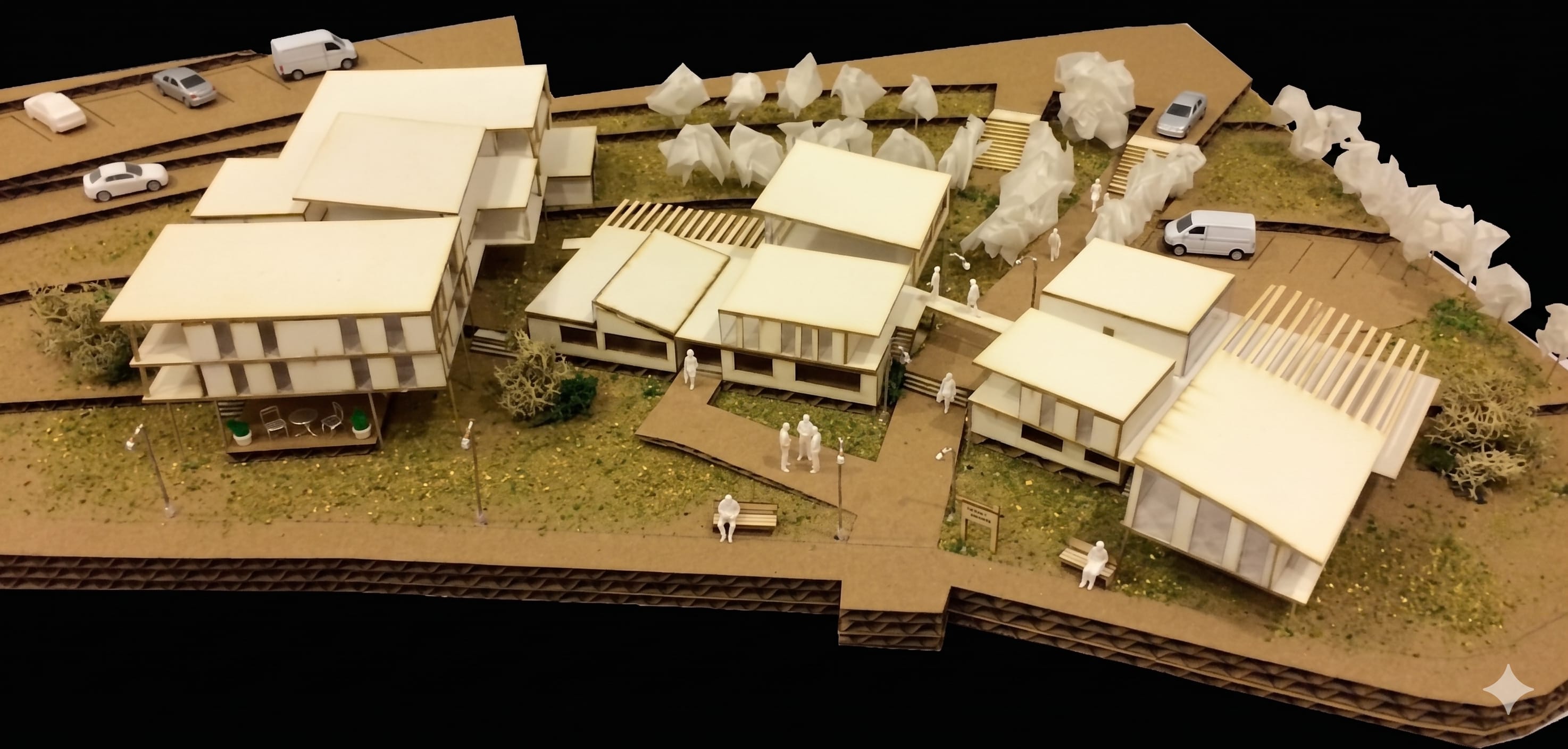
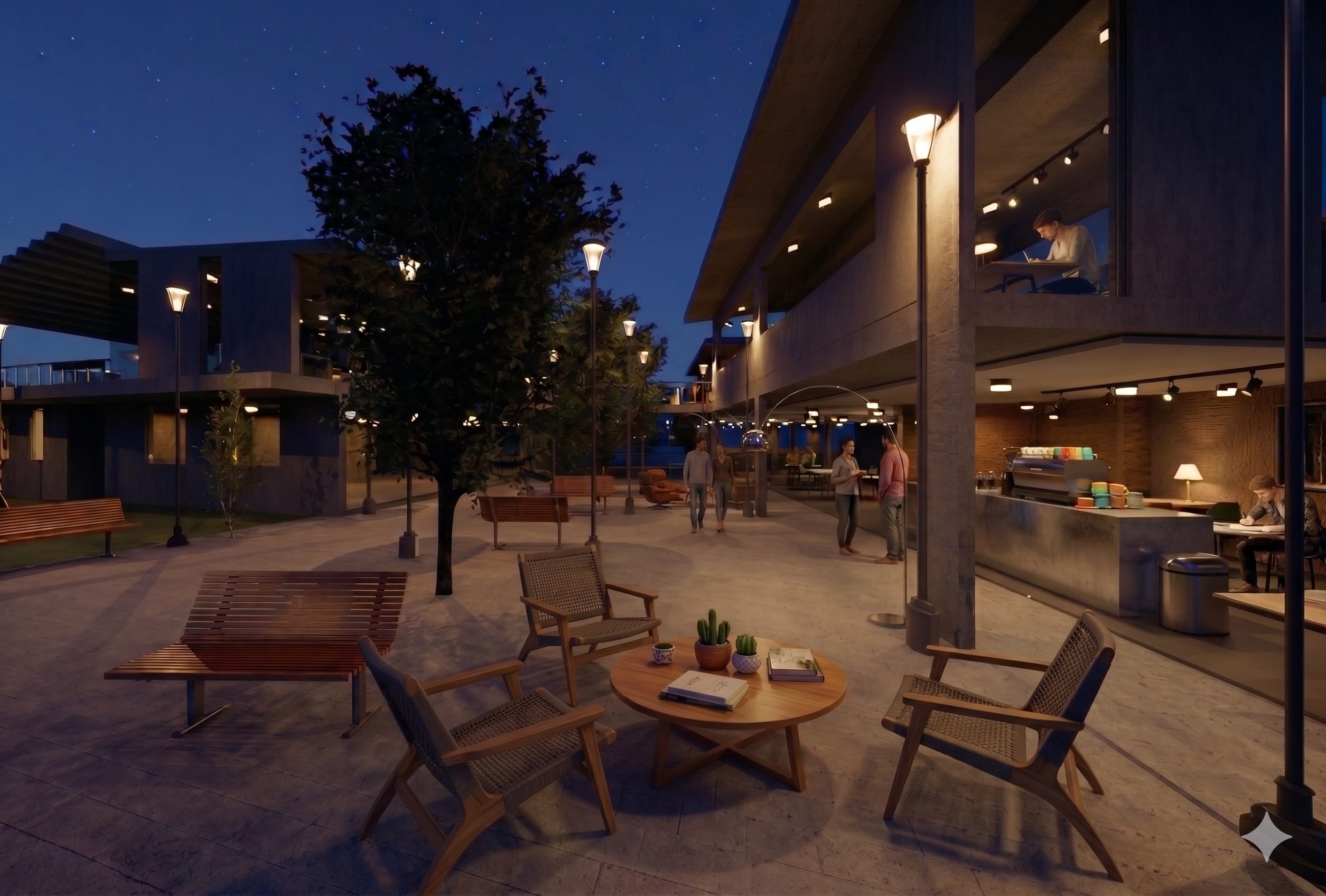
The Byblos Waterfront Center is an Environmental and Educational Center located in Jbeil (Byblos), Lebanon — a city that dates back to the Phoenicians and was once one of the main ports of the region. The center connects the historic city to the sea. Its design encourages an open-space circulation pattern: buildings are scattered along the site, allowing visitors to move freely between interior educational spaces and the exterior sea view.
Using the water as the primary orientation, the entire project leads towards the seafront. Starting from the main city street, access towards the water becomes part of the journey of entering the site. The buildings are scattered along the entire site, gaining maximum exposure to northern light and maximising views towards the Mediterranean.
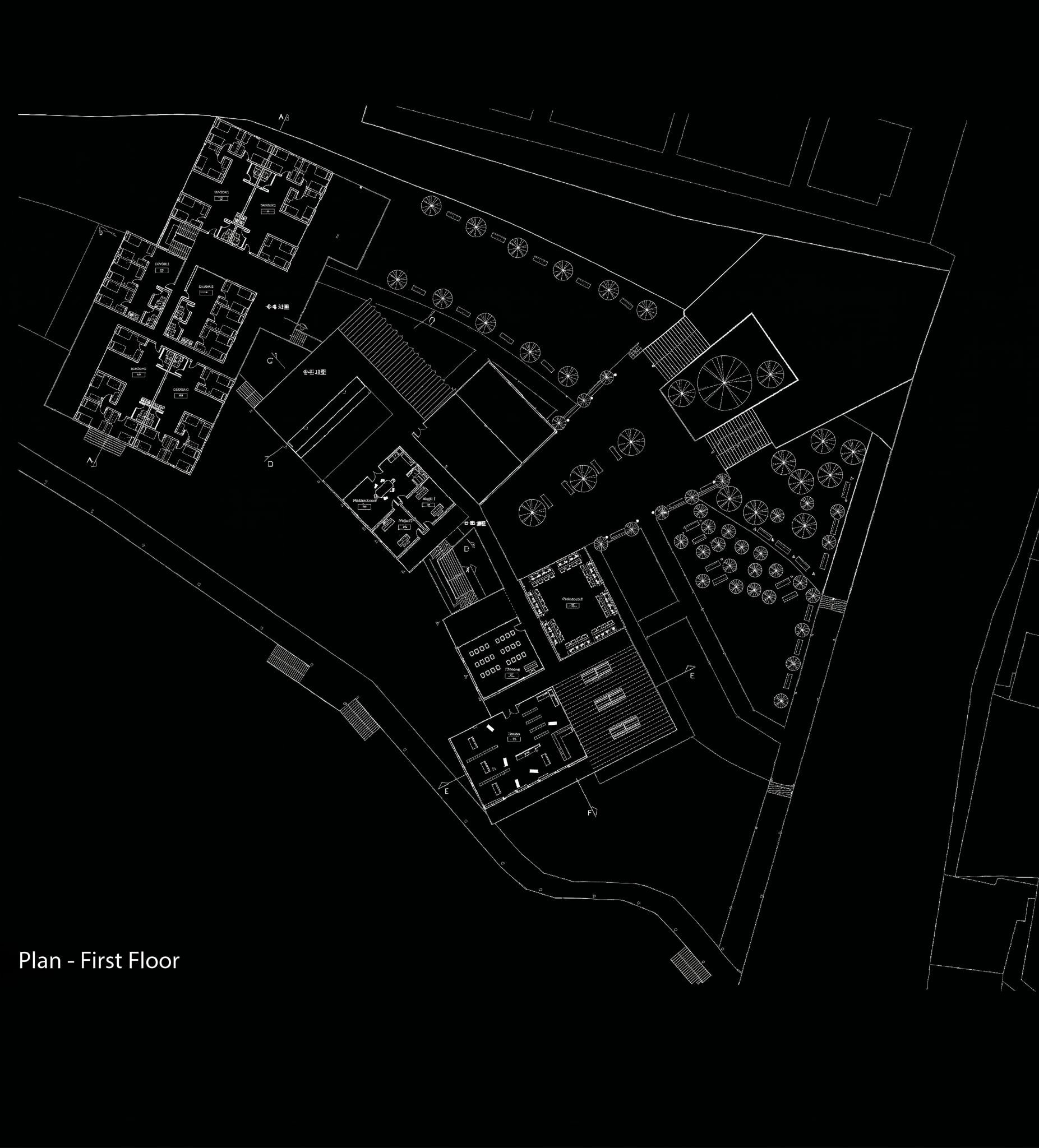
Since the buildings are distributed across the site, they are connected by a series of bridges to allow internal circulation across the project. The ground-floor external circulation is designed as open public space — a promenade from the ancient city down to the waterfront. The program breaks into four groups, distributed along the shoreline so that each has direct open access to the sea.
The project is organised across three floors — ground, first, and second — with the program shifting from public and collective at ground level to more private educational functions above. Sections AA and BB reveal the relationship between the scattered building masses and the sloped coastal terrain, with the buildings stepping down towards the water.