—
Chocolate
Board
Material Exploration · Making · Product
Year
2021
Type
Academic — Material Exploration
Status
Executed
Influence
Bauhaus
Medium
Chocolate · Silicone Molds · Geometric Form
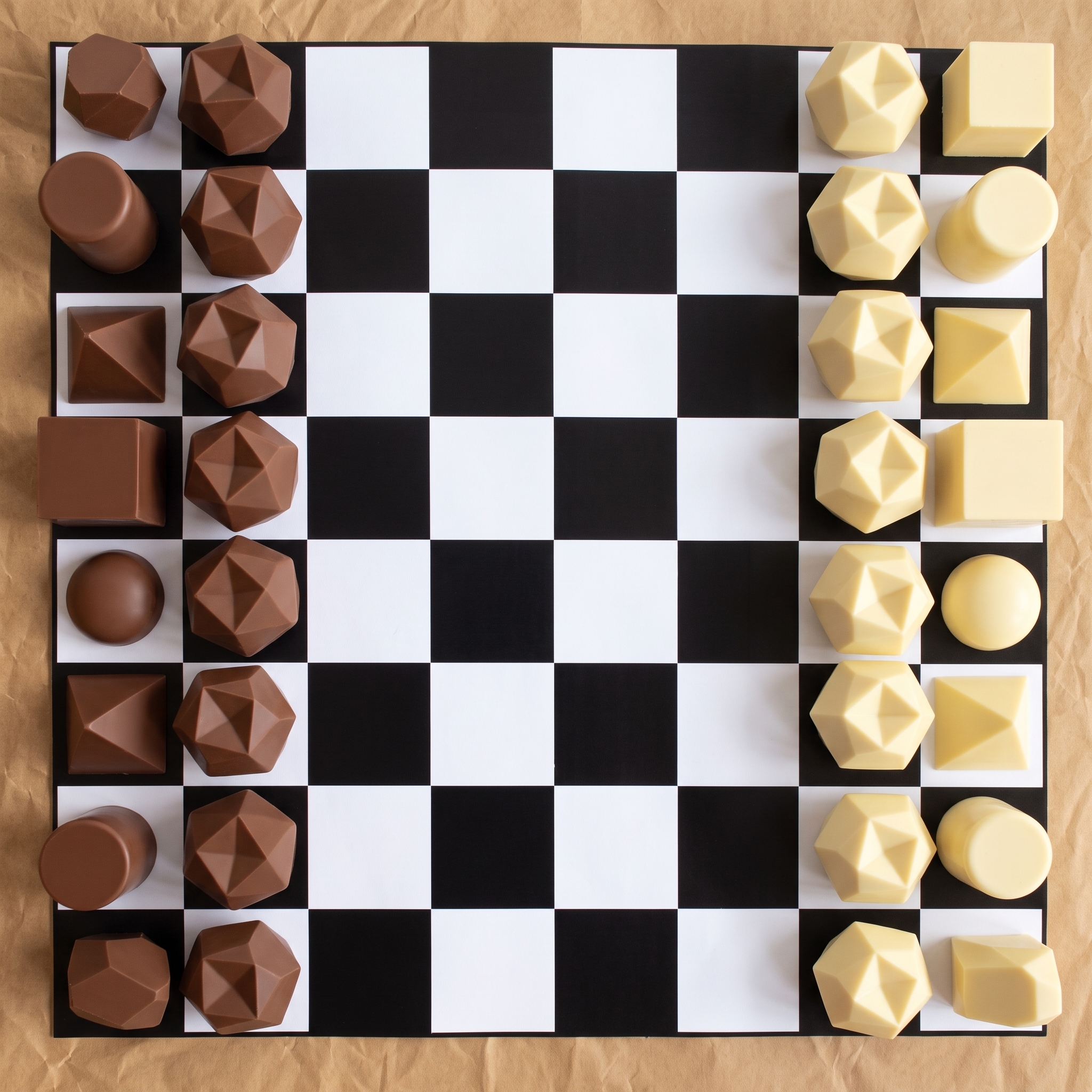
As part of a Material Exploration series, chocolate became the next medium to test. This project explored the methods of chocolate tempering and how the material can be controlled, molded and shaped into precise geometric forms. Taking the Bauhaus as an influence, the result is a chocolate chessboard composed entirely of different geometric shapes — a study in material discipline and formal composition through an edible medium.
Chocolate tempering is a precise thermal process — melting, cooling, and reheating to specific temperatures to align the cocoa butter crystals into a stable form. The result is chocolate that snaps cleanly, has a glossy finish, and holds detail when cast into molds. Getting it wrong means the chocolate blooms, stays soft, or refuses to release.
The project required understanding chocolate as a material with structural properties — viscosity, setting time, shrinkage on cooling — before any formal exploration could begin. This material literacy was the foundation of every decision that followed.
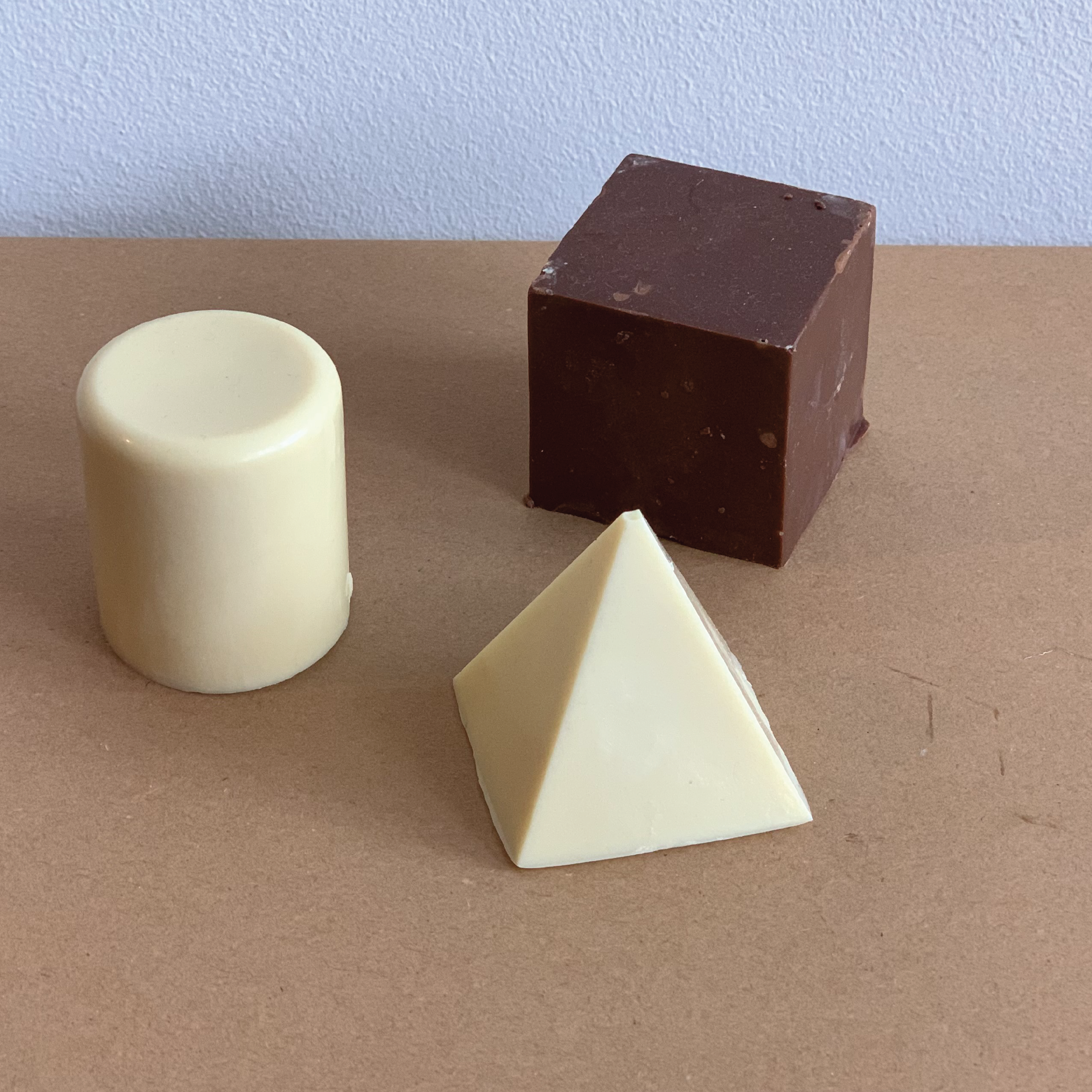
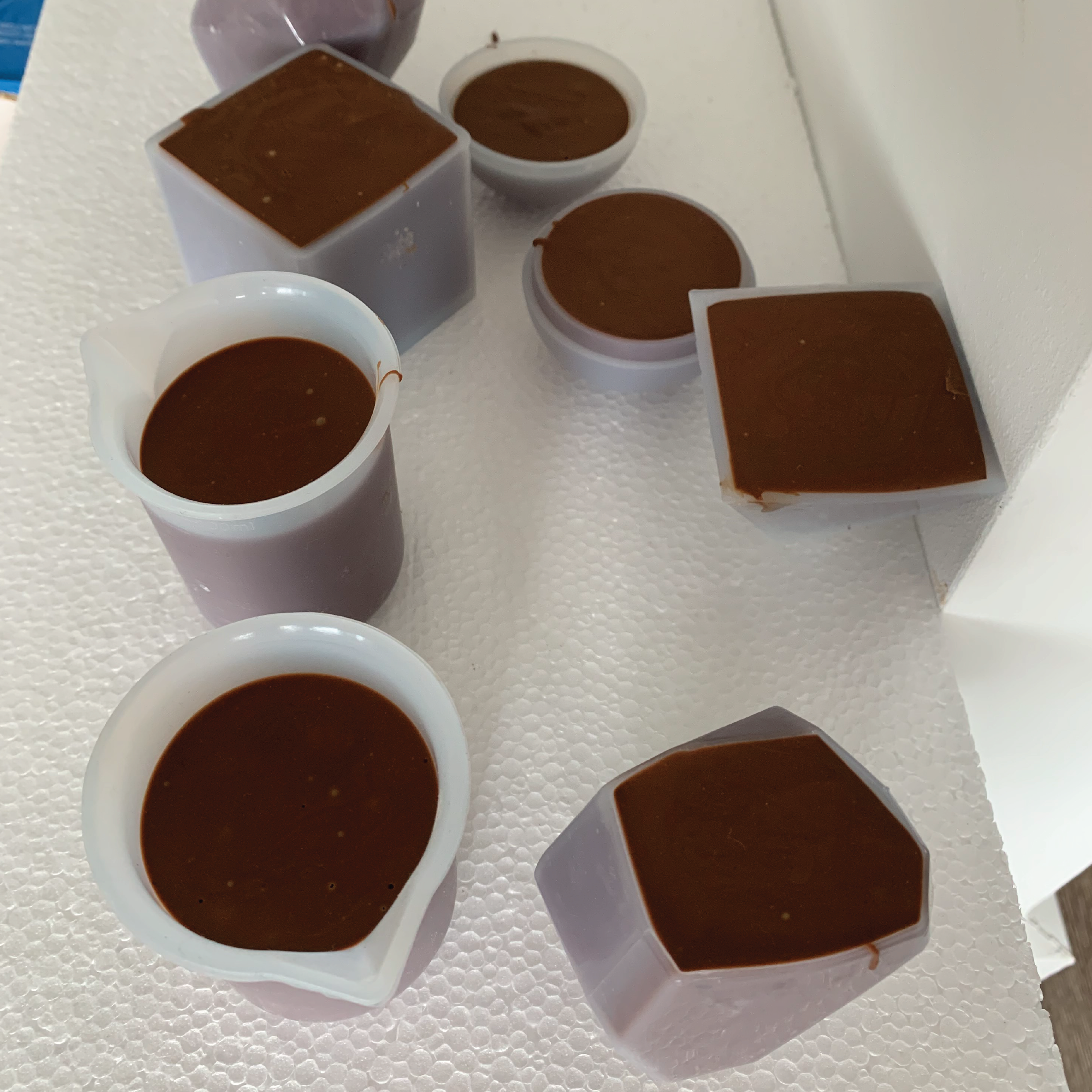
The molds required intense exploration and experimentation. Each geometric piece of the chessboard — triangles, hexagons, rectangles and other Bauhaus-derived shapes — needed its own mold, designed so that cast pieces would fit together precisely on the board without gaps.
Silicone molds were chosen for their flexibility and detail resolution. The challenge was not just making forms that held chocolate, but designing a system of interlocking geometry where every piece related to every other — a modular logic applied to a material that does not forgive imprecision.
The Bauhaus approach to material workshops — where students worked directly with a medium to understand its properties before imposing form — was the guiding principle here. The chessboard is not a decoration. It is the result of understanding chocolate's properties and letting those properties determine what forms were possible.
The geometric vocabulary of the Bauhaus — reduced, systematic, anti-ornamental — translated naturally into a chessboard format where each square becomes a study in a different shape, and the whole becomes greater than its parts.