16
Mapping
Encounters
Material Exploration · Urban Planning
Year
2017
Location
Beirut, Lebanon
Type
Academic — Material & Urban
Status
Executed
Team
Isabela Serhan · Yara Youssef
Beirut suffers from accessibility, segregation, gentrification, and other aspects that limit the diffusion of creativity in the city. This project approaches Beirut without preconceptions — identifying the negative space created by the built environment, mapping it as a field of voids with no identity, and then extracting the barrier characteristics of existing creative pulses versus potential ones. From there, the urban relations between existing and potential pulses are questioned.
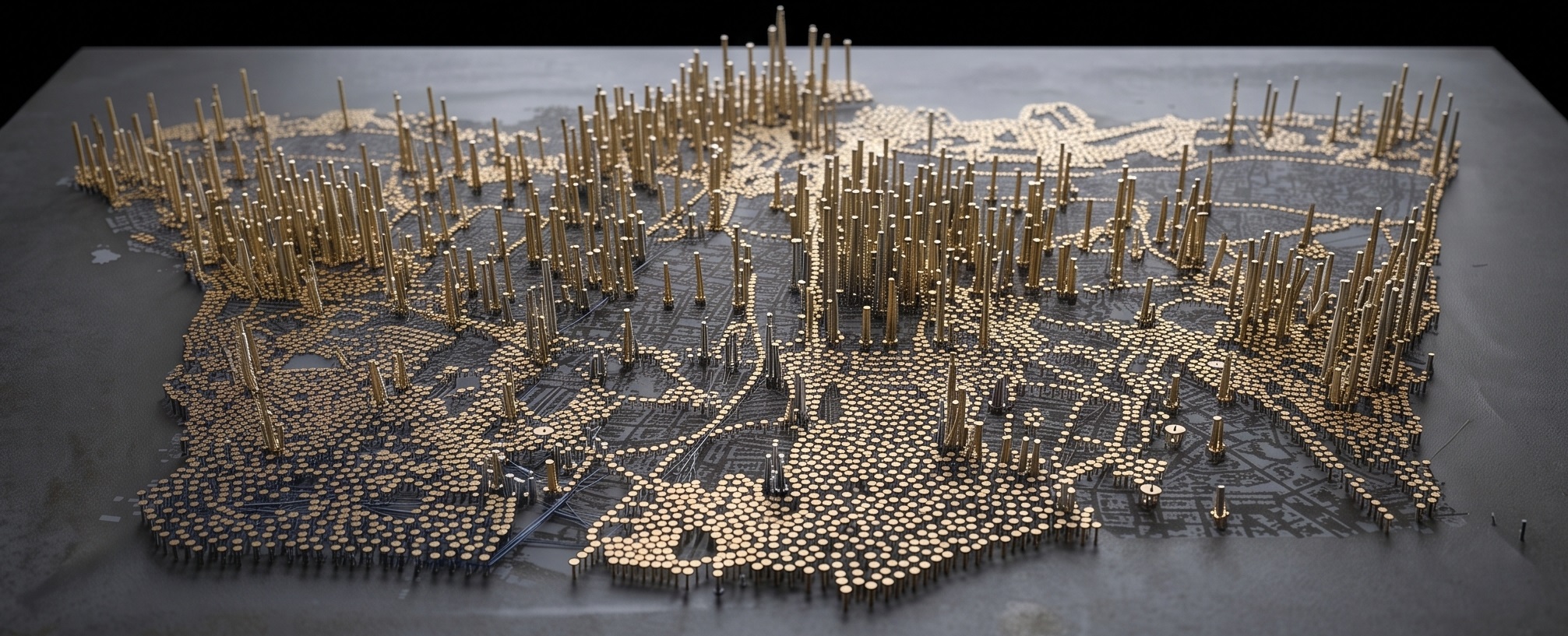
The project began by looking at Beirut's streets and open spaces not as infrastructure but as voids — gaps in the built fabric that hold latent identity. By mapping physical, economic, and cultural barriers present in the city, patterns emerged that revealed where creativity currently concentrates and where it could.
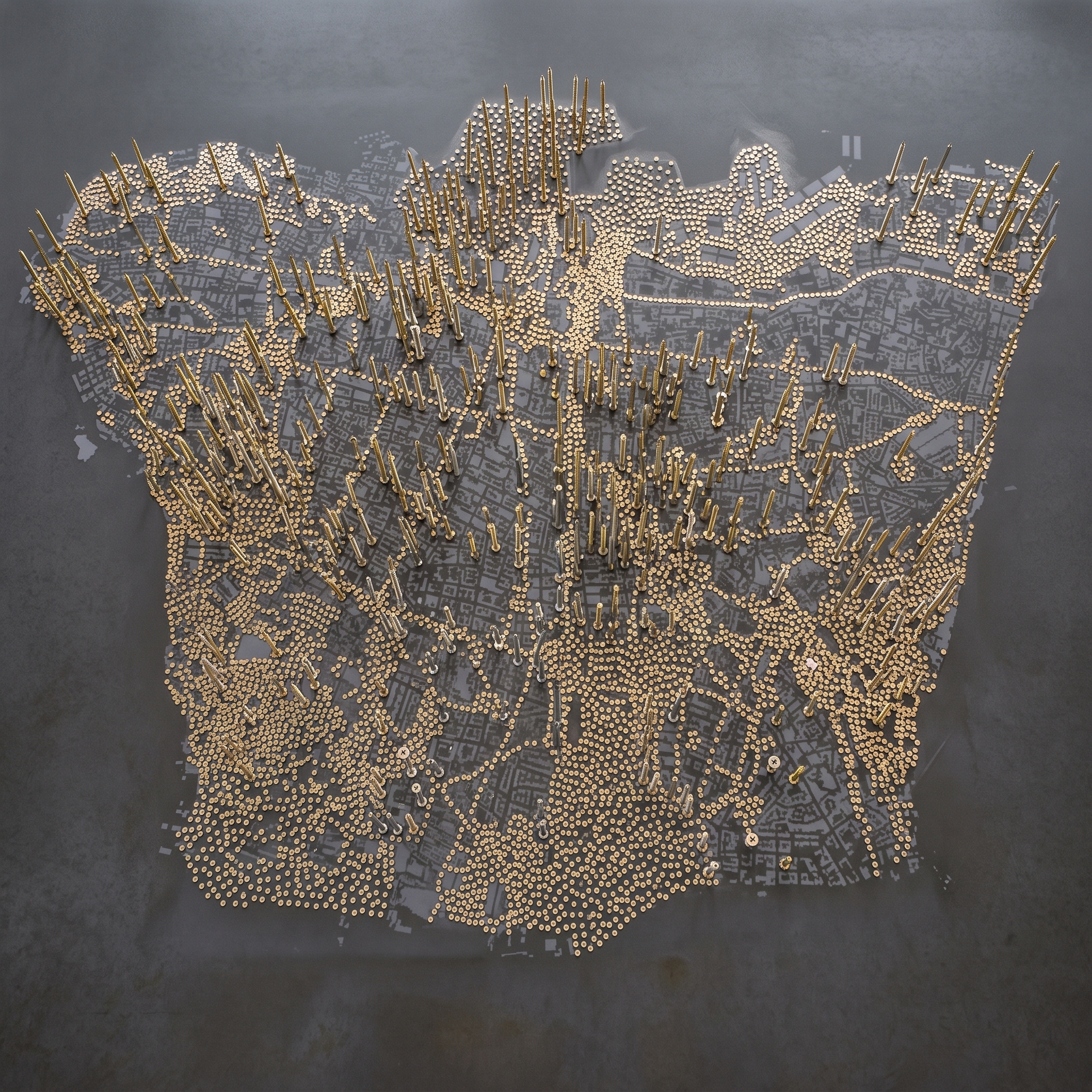
The barriers — walls, economic thresholds, cultural zones — were abstracted into a three-dimensional material installation. Bolts, nuts, and coins of varying heights were used to physically represent the density and intensity of urban barriers across different neighbourhoods of Beirut, creating a topographic map of the city's hidden friction.
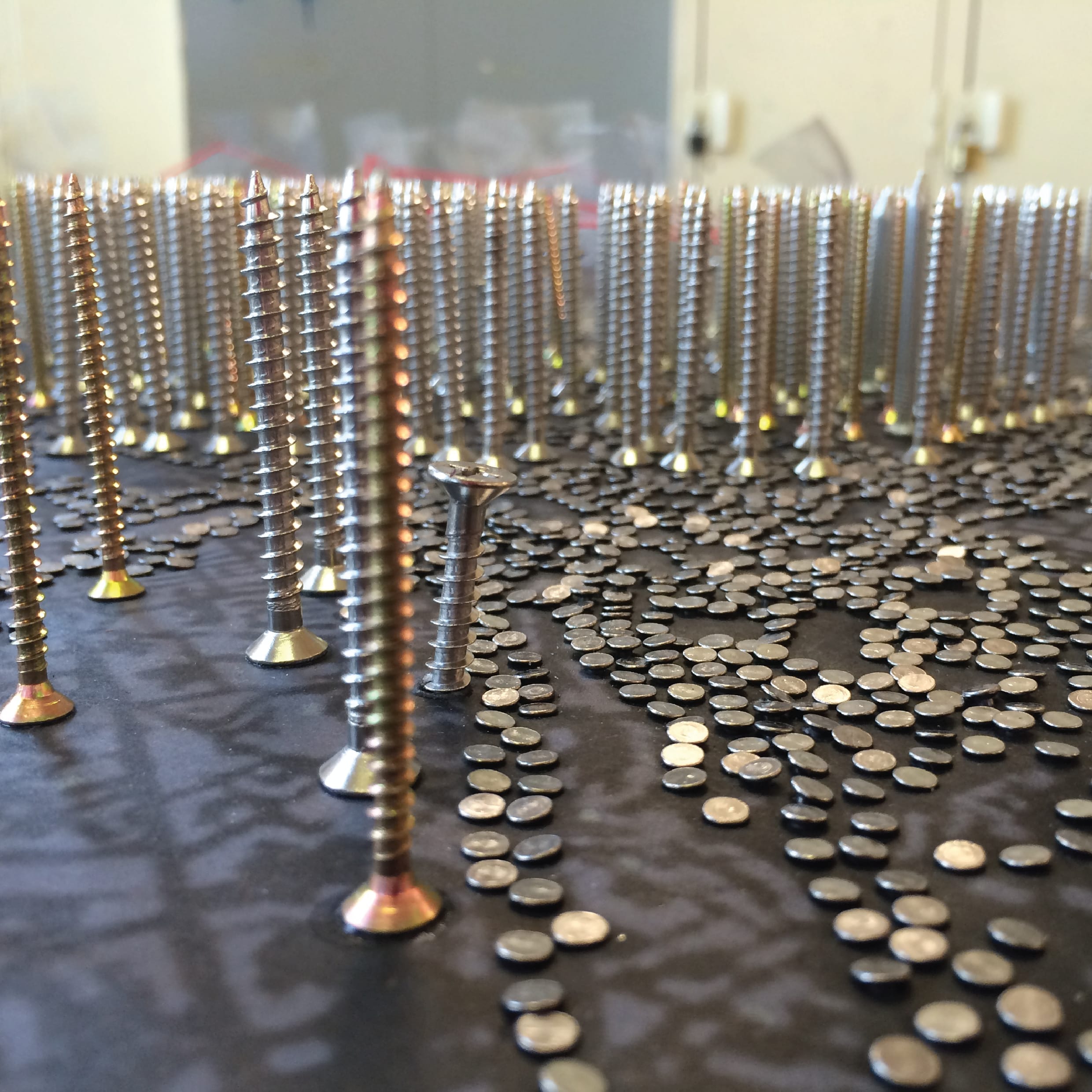
After extracting barrier characteristics, the team compared existing creative pulses in Beirut — art districts, cultural hubs, independent spaces — against zones identified as potential pulses based on their spatial and social conditions. This comparison opened a dialogue about how the city could evolve if its invisible barriers were acknowledged and redesigned.
The result is a critical urban mapping that uses material as data — where height, density, and material type communicate what a conventional map cannot: the felt experience of moving through a segregated, gentrifying city.