18
Sun
Pavilion
Computational · Pavilion
Year
2015 (Revisited 2022)
Location
Beirut · Lebanon
Type
Academic — Pavilion
Status
Conceptual — Design Phase
Team
Collaboration — Noor Hajj
Tools
Rhino · Grasshopper · Ps · Ai
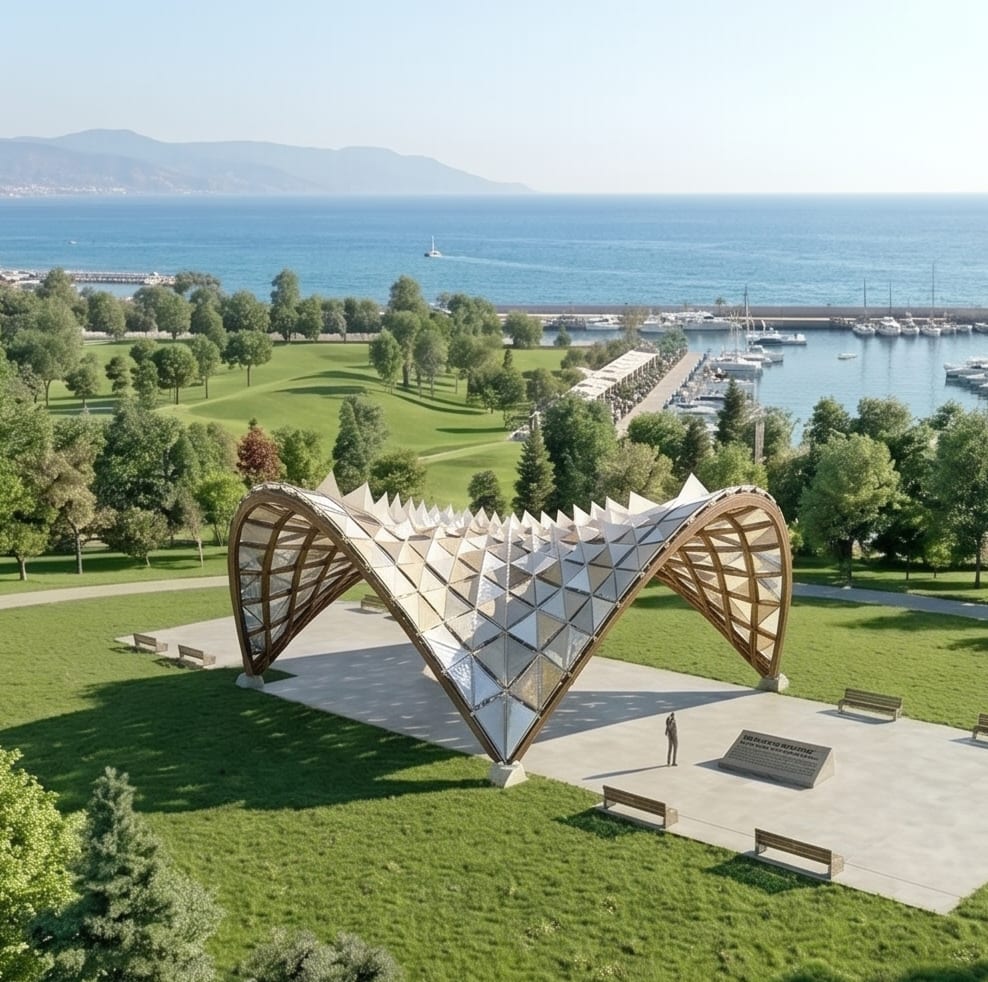
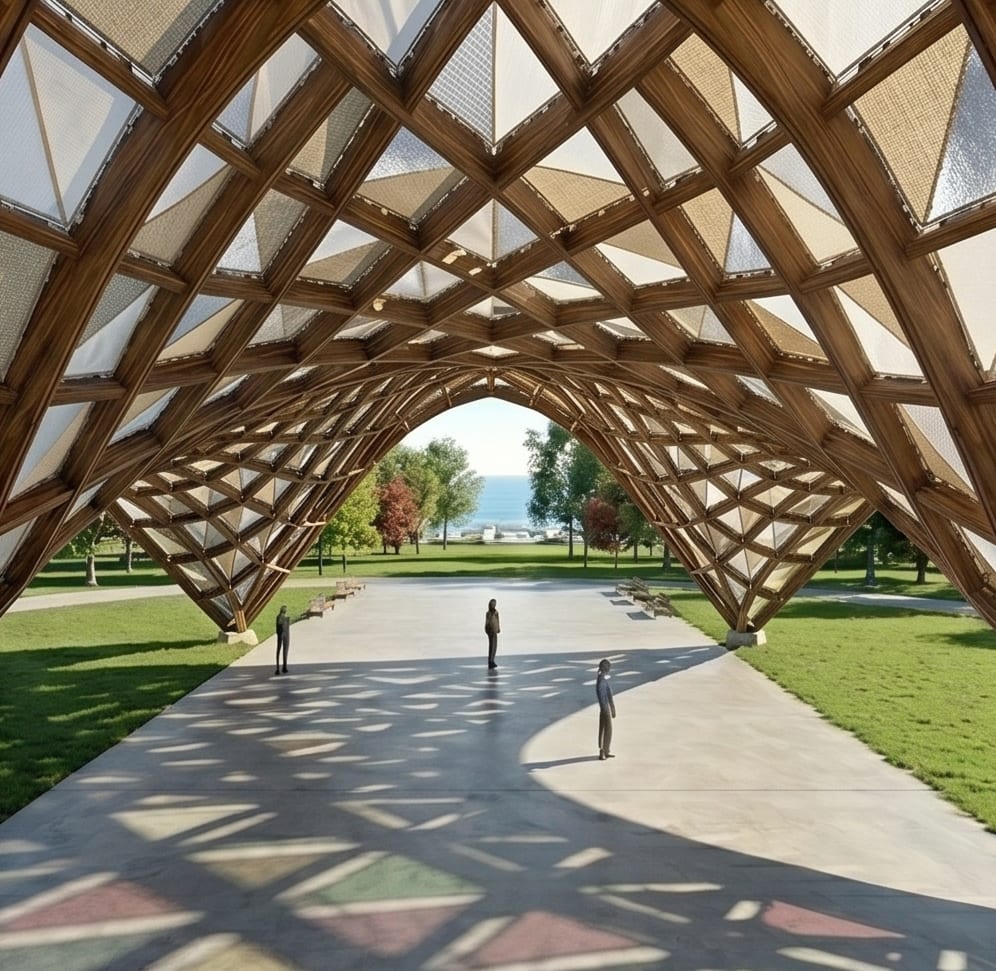
The Sun Pavilion is an outcome based on several iterative explorations influenced by the direction and effect of the sun. As an introduction to Grasshopper, an algorithmic model was developed around triangular openings and flaps responding to the sun’s position — producing multiple iterations from a single parametric definition. One instance of maximum sun exposure was selected and exported for fabrication as a physical model.
The algorithm adapts to the location of the sun — the flaps open and close based on its movement throughout the day. The system creates several iterations based on a single parametric framework, each representing a different moment in time.
For this project, a specific instance of maximum sun exposure was chosen and exported for 3D printing. The outcome is a momentary instance of the Sun Pavilion — a frozen moment of an adaptive, ever-changing structure.

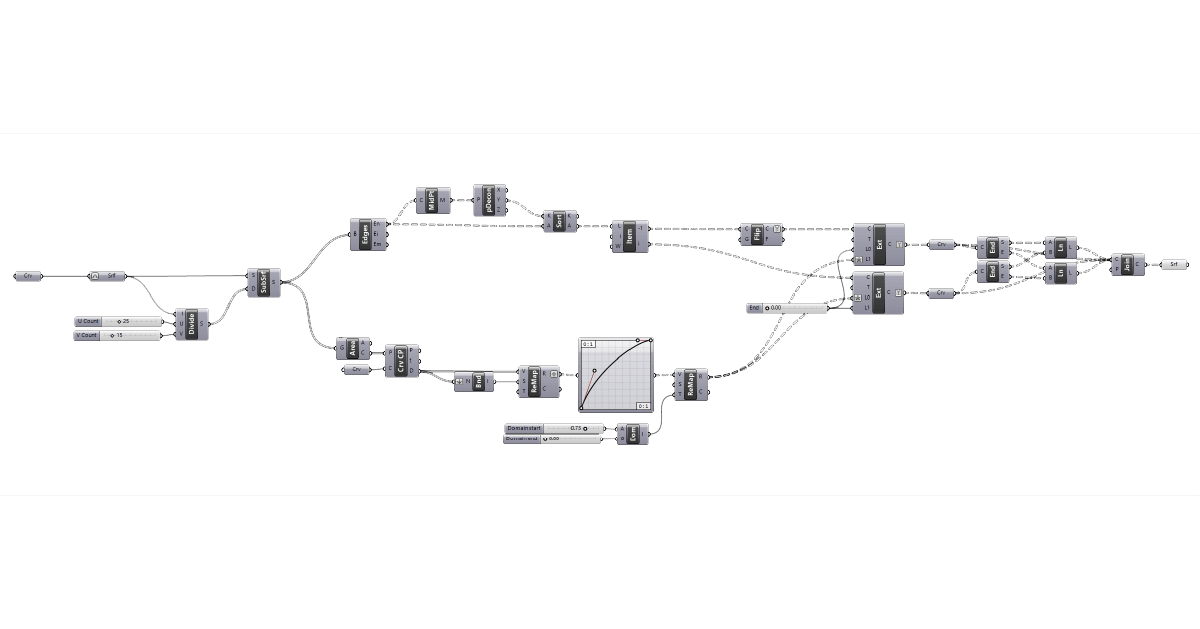
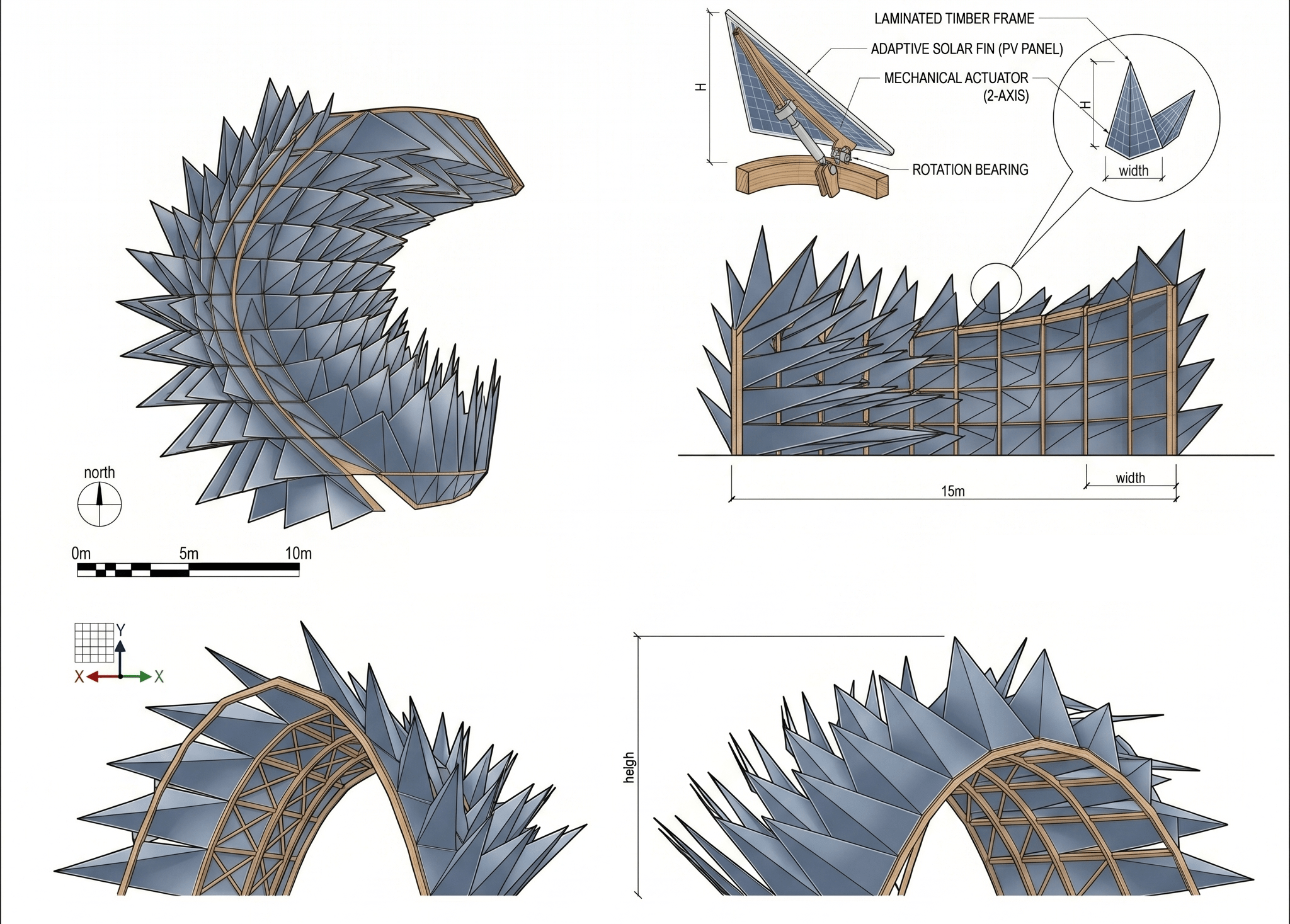
The computational workflow begins with three catenary curves lofted into a surface and isotrimmed. Points along the curves are used to create an offset mesh in the Z direction. The two meshes are lofted to form the ribbed structural system.
The sun is set as an attractor point. The distance from the attractor to each vertex of the triangular flaps is measured and used to drive the aperture of each flap — open or closed relative to solar exposure. This produces a canopy that continuously responds to the sun’s position.
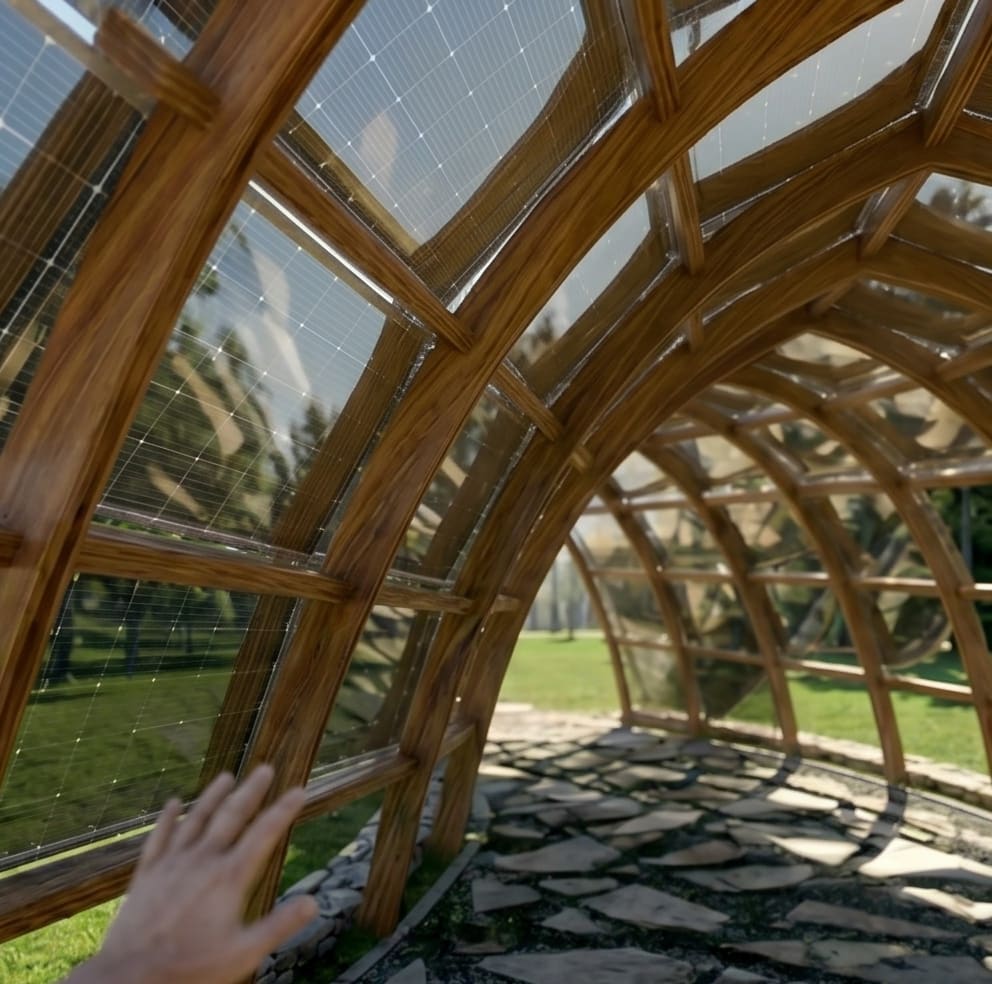
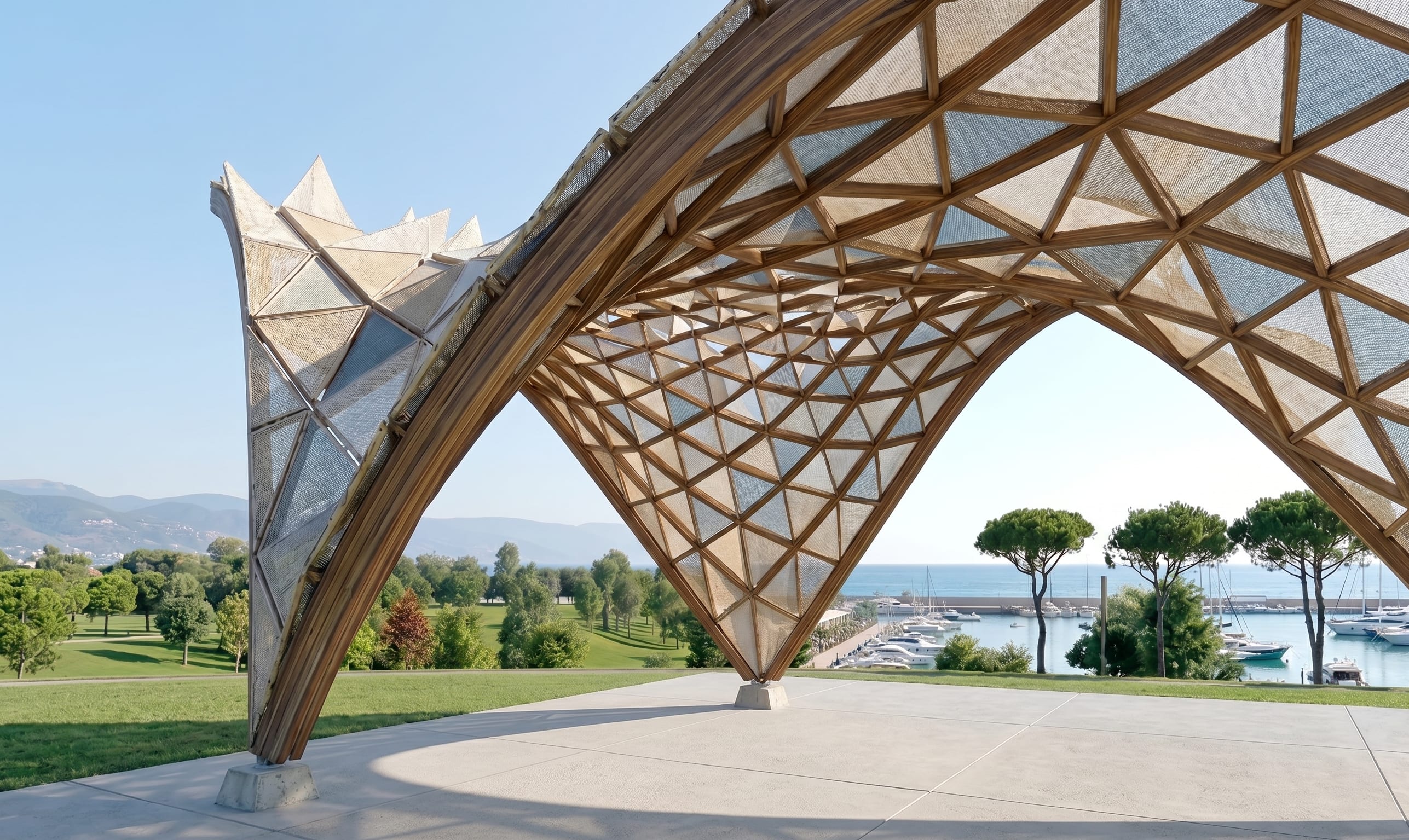
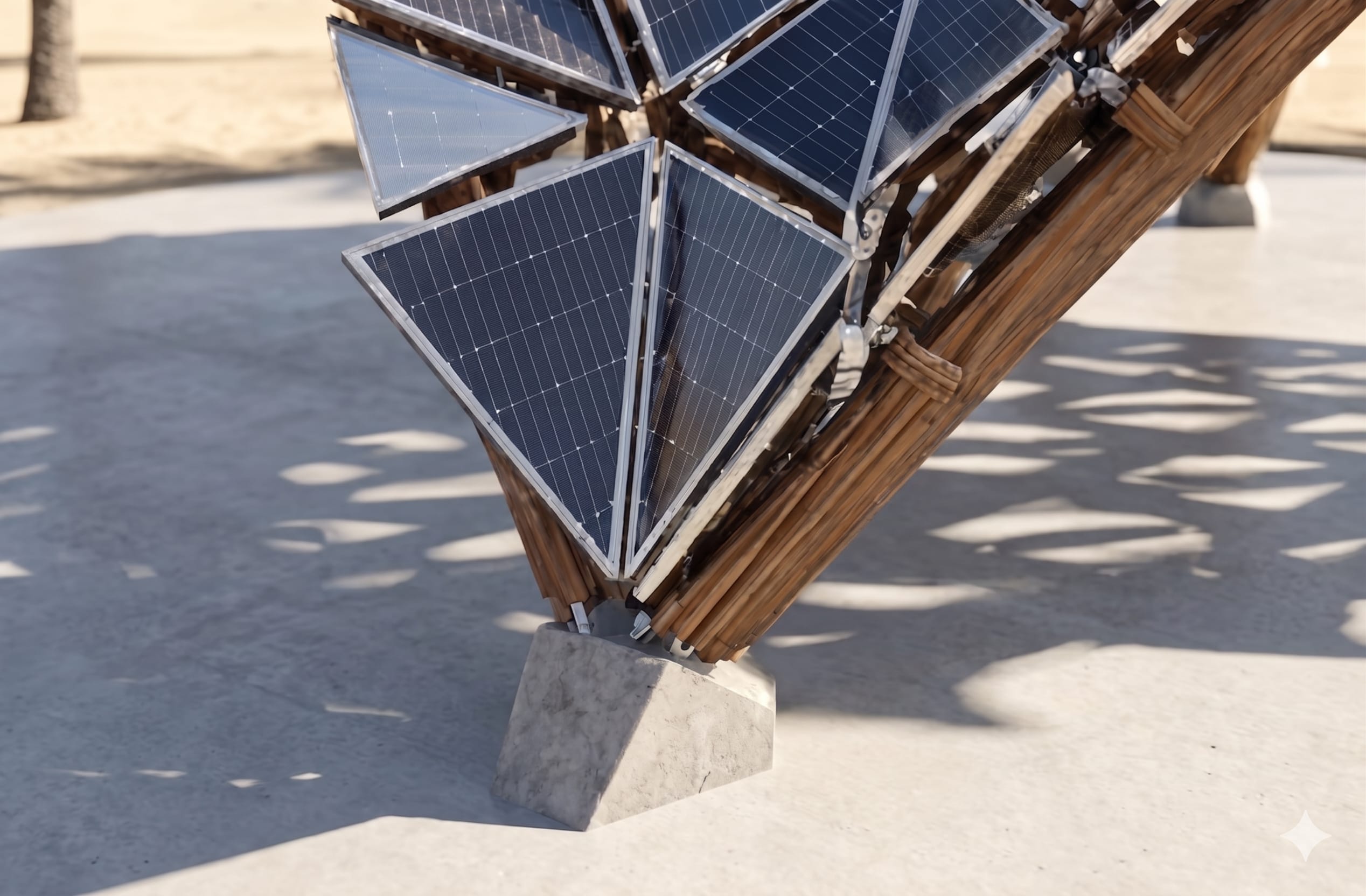
The selected sun moment was exported and fabricated. Structural components include a laminated timber frame, adaptive solar fins (PV panels), a mechanical actuator (2-axis), and a rotation bearing at each flap joint.
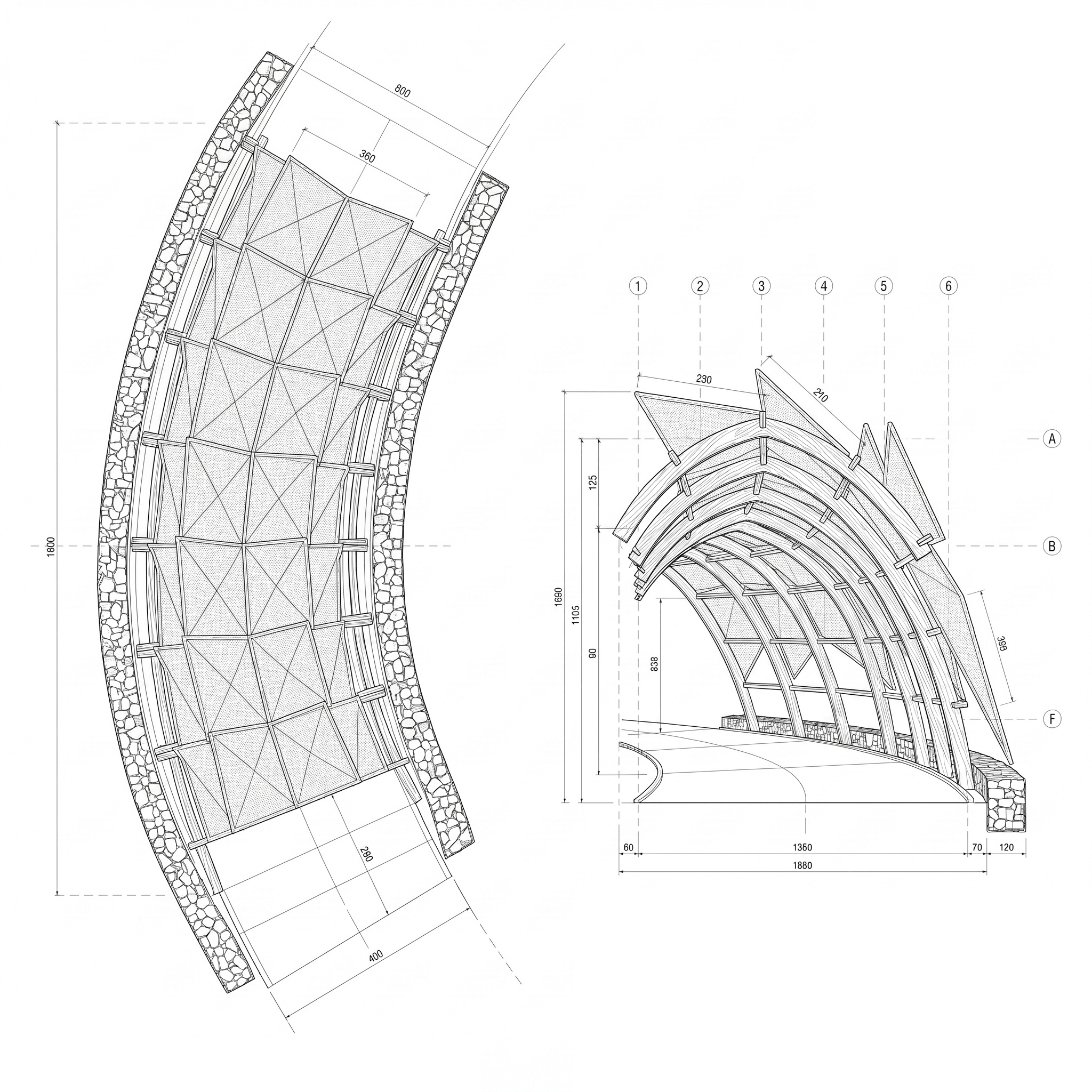
The structure was further explored through sectional studies and physical model iterations, testing fabrication logic at the connection level.
The same parametric system was tested across three material palettes — each changing the character of the pavilion while keeping the algorithmic structure identical. Wood / Wicker / Photovoltaic gives the warmest, most organic feel. Steel / Glass / Photovoltaic reads as high-tech and precise. Steel / Fabric / Wicker sits between the two.
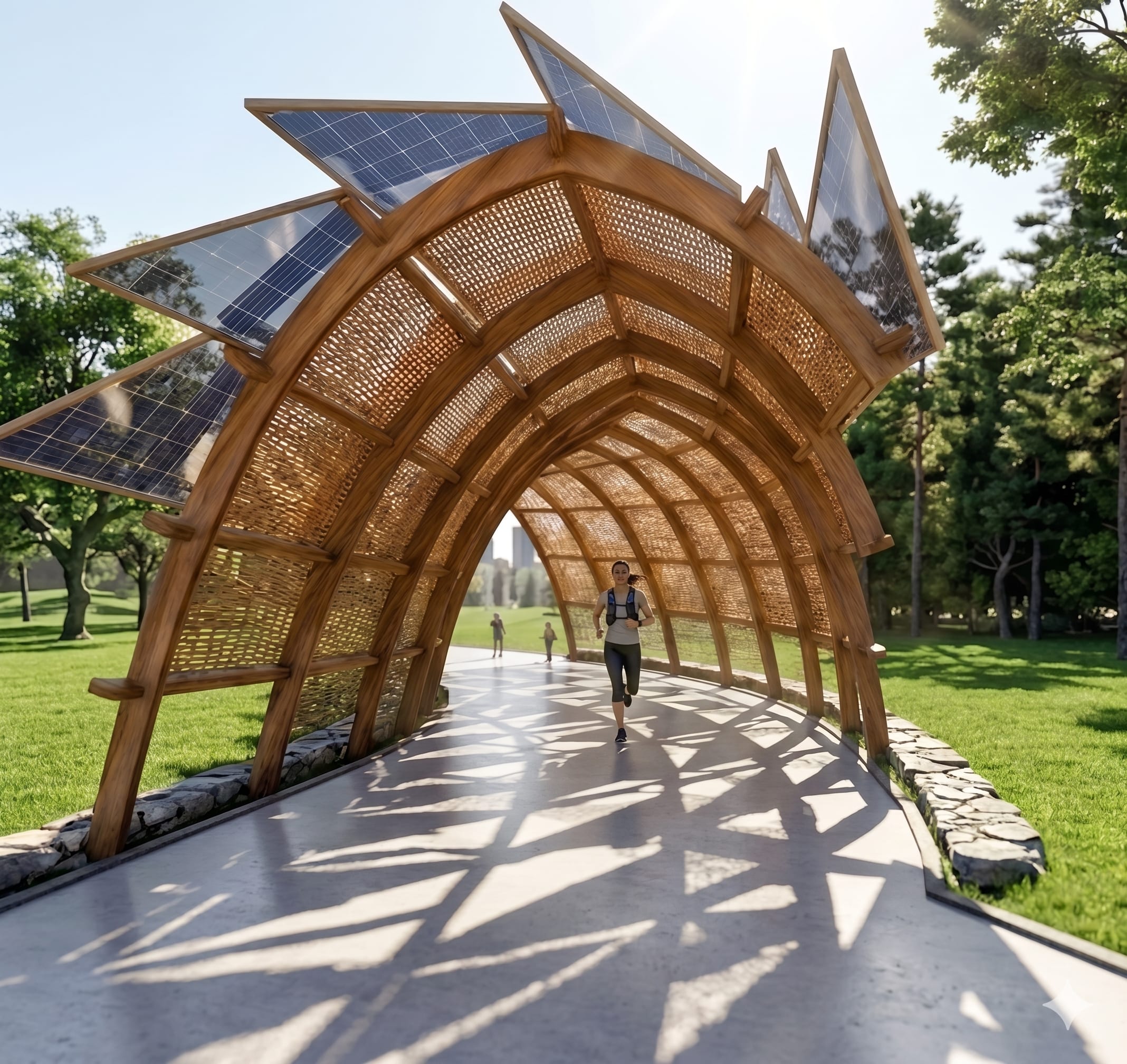
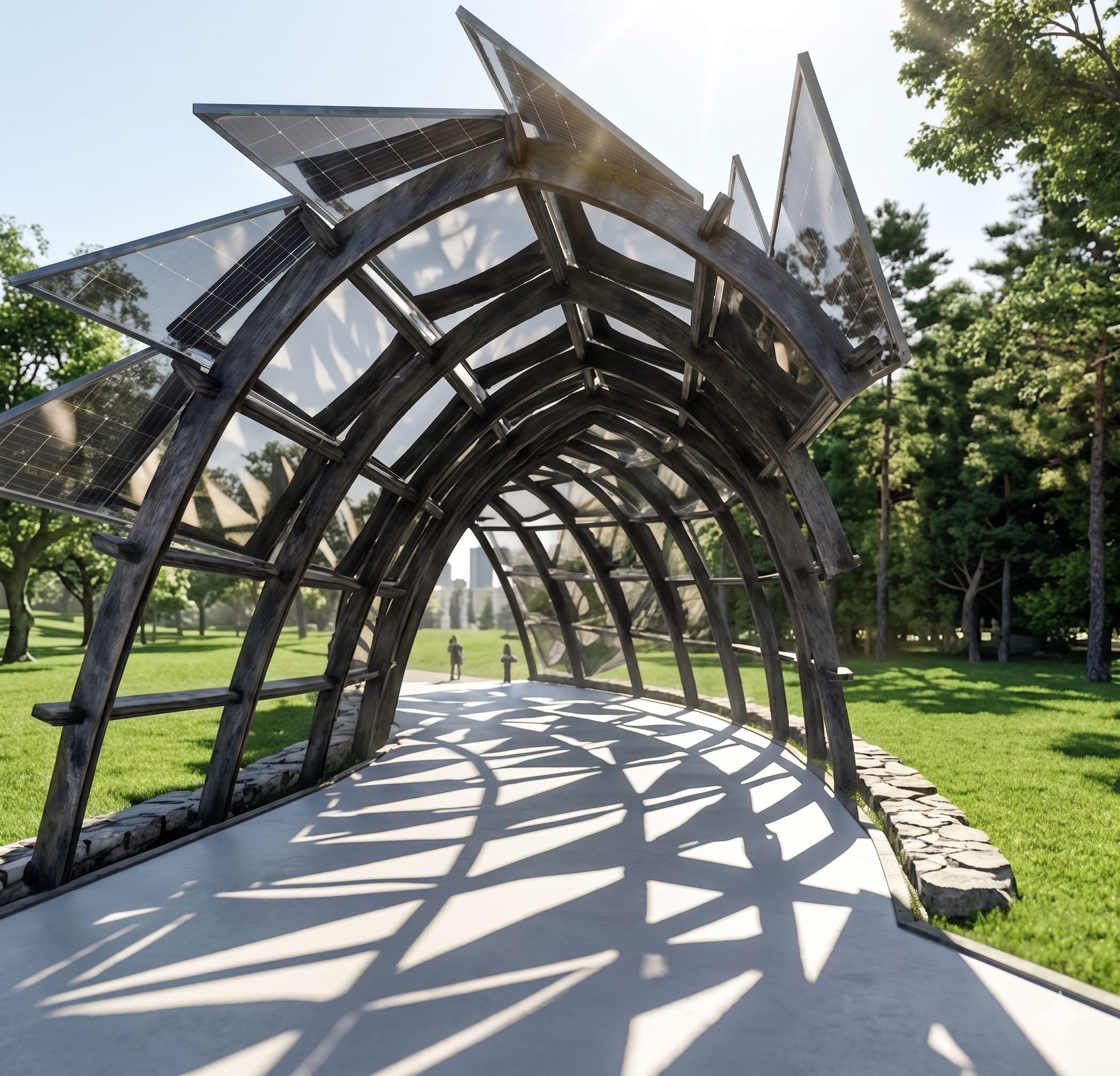

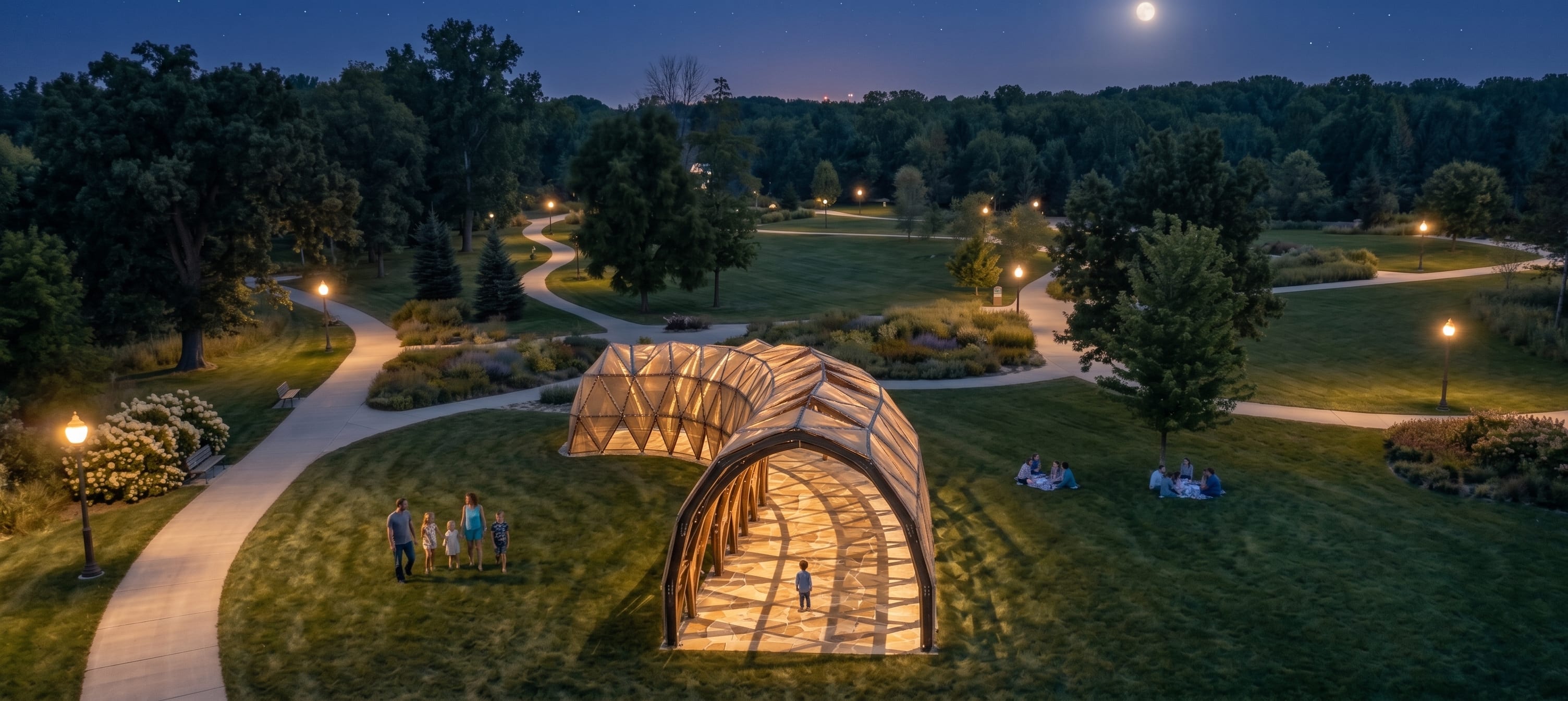
This system was developed with a framework of substructure and triangulated cover that adapts to the sun and its position. After developing the system, different pavilion shapes were explored to prototype the system and its function.
This iteration is a parabolic pavilion with a wood subframe and a fabric triangulation that adapts the same way as the original system — demonstrating that the algorithm is shape-agnostic and can be applied to any structural host geometry.