23
Architectural
Detailing
Academic · Hand Drafting & Surveying
Year
2013
Location
Beirut, Lebanon
Type
Academic — Surveying
Status
Completed
Team
Isabela Serhan · Mariam Maria Yasin
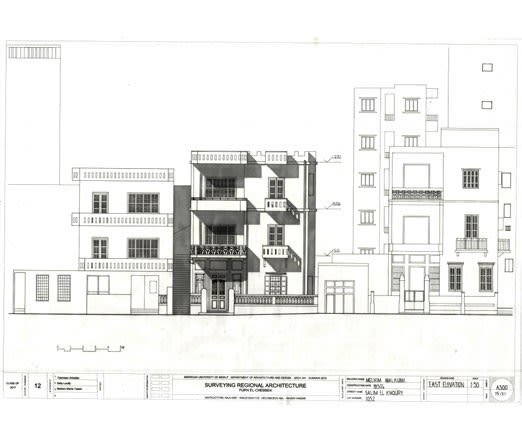
One of the first projects that connected me physically with architecture — a surveying project in the summer of 2013. The Melhim Malkumi Building, located in Furn el Chebek and built in 1959, became the subject of an intensive study in Lebanese heritage architecture. The entire building was surveyed, measured, and drawn entirely by hand — no computer-aided programs, no digital tools. Everything was observed, recorded, and detailed through direct physical engagement with the building.
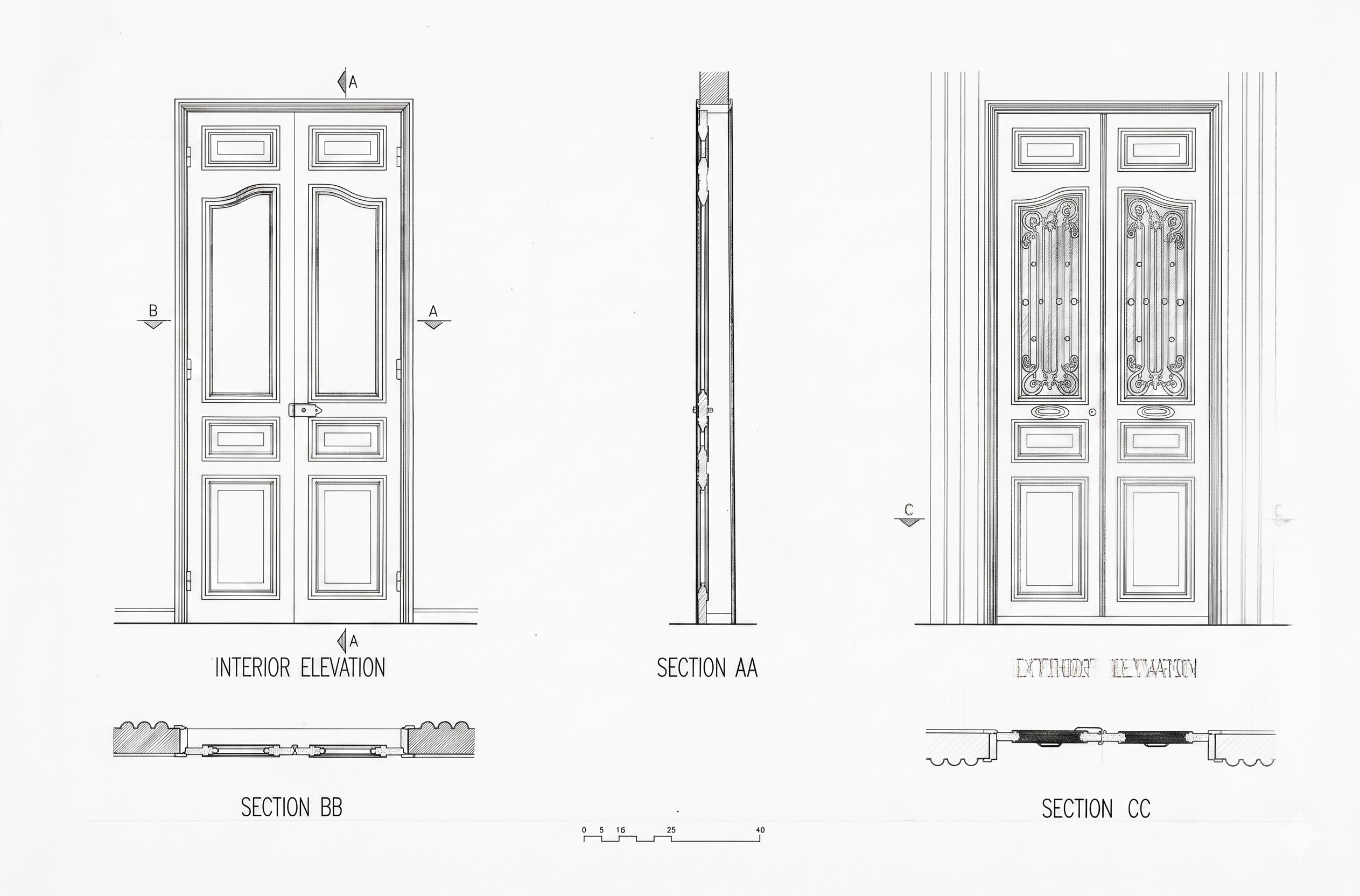
The survey required the team to measure every dimension of the Melhim Malkumi Building on-site — facade widths, opening proportions, ornamental detail depths, floor-to-floor heights — and translate these measurements into scaled architectural drawings without the aid of digital tools. This process forced a close, physical understanding of how the building is made.
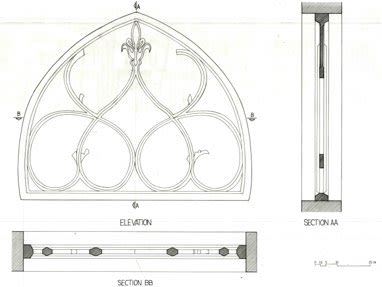
The drawings produced include interior and exterior elevations, multiple cross-sections (AA, BB, CC), and detailed studies of the building's ornamental arched windows — a defining feature of the 1959 Beirut apartment building typology. The arched window details, with their layered profiles and decorative keystones, received particular attention as studies in both geometry and craft.

The full drawing set captures the building at multiple scales — from the full facade elevation at urban scale to the ornamental window at 1:5 detail. Each transition in scale reveals a different layer of the building's craft: the overall composition at distance, the proportional system at mid-range, and the masonry and ornamental logic up close.